Lifeboat No. 24
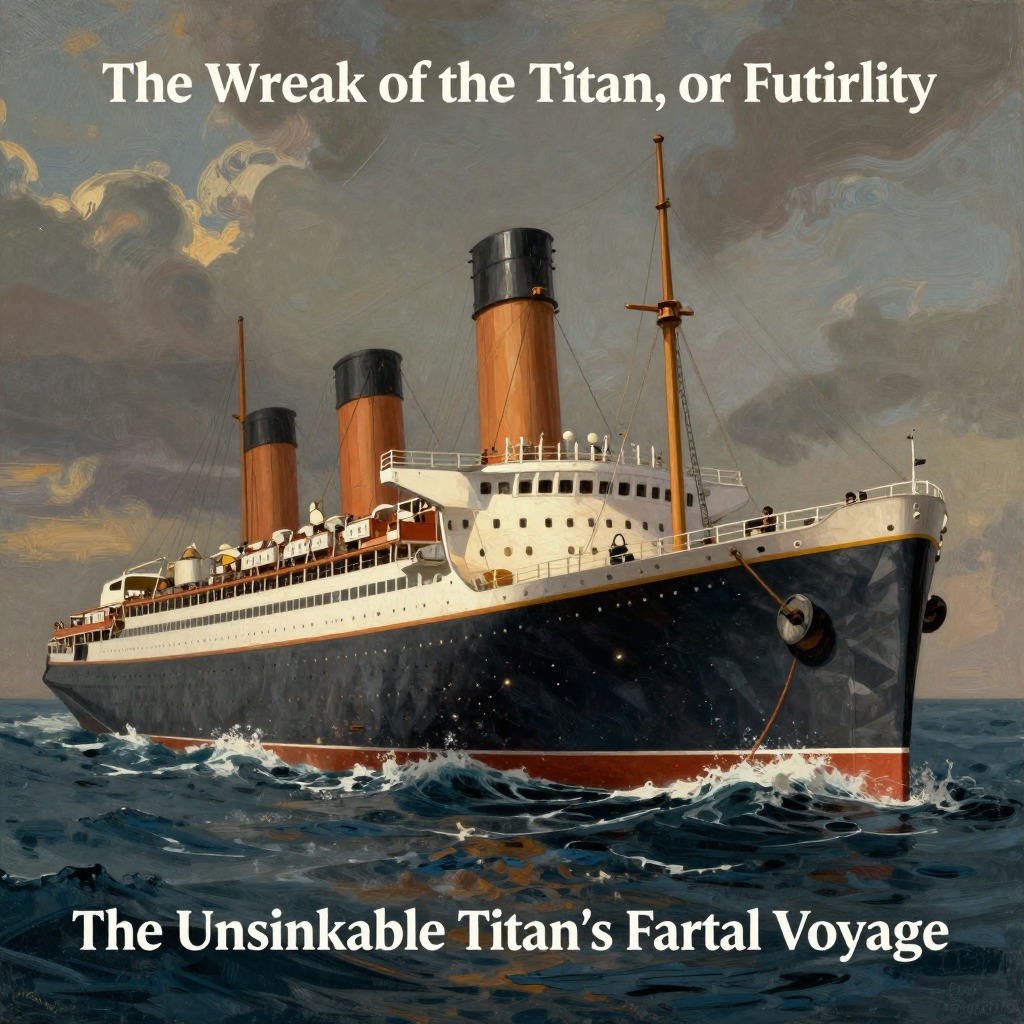
Lifeboat No. 24 is the sole lifeboat that is successfully launched from the steamship Titan during its catastrophic collision with an iceberg. In a disaster where nearly all of the ship's three thousand passengers and crew perish, this single boat becomes the instrument of survival for a handful of people, most notably Myra Selfridge, the only woman passenger saved. Its launch, witnessed by John Rowland from the wreckage-strewn ice, sets in motion the novel's central separation and eventual reunion, making it a crucial object in the narrative's structure of loss and recovery.
Launch and the Separation of Mother and Child
As the Titan crashes onto the iceberg and heels over, the starboard davits are smashed by a pyramid-like hummock of ice, destroying most of the boats. Yet, in the chaos, Rowland, dazed and bleeding from a head wound, believes he sees men working on the upper davits and that the nearest boat—No. 24—is swinging by its tackles. This observation, made through the distorting lens of the drug he has been given, proves accurate. The boat is lowered successfully, and in its stern-sheets crouches Myra Selfridge, moaning and praying, crying and screaming for her husband and baby. A brass-buttoned officer assures her that her child is safe in the care of John Rowland, a brave and trusty sailor, who is certainly in the other boat with it. He does not tell her that Rowland had hailed from the berg as she lay unconscious, and that if he still had the child, it was with him there—deserted. Thus, Lifeboat No. 24 physically removes the mother from the scene of the wreck, leaving Rowland alone on the ice with the sleeping child, a separation that defines the rest of the novel.
The Voyage to Safety and the Southern Lane
All night, as Rowland sleeps on the iceberg, the boat with the number twenty-four on her bow, pulled by sturdy sailors and steered by brass-buttoned officers, makes for the Southern Lane—the highway of spring traffic. This deliberate course, chosen by the officers, carries the survivors away from the wreck site and toward eventual rescue. The boat's journey is not merely a physical escape; it is a symbolic passage from the frozen, deadly north to the warmer, life-giving south. The Southern Lane, contrasted with the Northern Lane Route that the Titan had been steaming at full speed, represents the safer, more prudent path that the Titan's company had rejected. Lifeboat No. 24, therefore, embodies the alternative to the reckless speed that caused the disaster, and its successful voyage underscores the avoidability of the tragedy.
The Boat's Role in the Aftermath and Reunion
The boat's arrival at New York with its boat-load of survivors, including Myra Selfridge, is the first news of the disaster to reach the world, throwing the underwriters at Lloyds into a panic. The mother's survival, however, is incomplete without her child. The narrative repeatedly returns to the boat as the means by which the mother and child are separated, and it is only through Rowland's arduous efforts—his fight with the polar bear, his rescue by the bark Peerless, and his journey to America—that the reunion becomes possible. When Rowland finally steps down the gangplank in New York with Myra on his shoulder, it is the culmination of a journey that began with Lifeboat No. 24's departure. The boat, though absent from the final scene, casts a long shadow over it: the mother's frantic joy at seeing her child is tempered by her mistaken belief that Rowland had harmed her, a misunderstanding rooted in the very separation the boat created. In this way, Lifeboat No. 24 is not merely a physical object but a narrative device that structures the novel's central conflict and its resolution, embodying both the tragedy of loss and the possibility of salvation.